
How Much Does a kitchen remodel cost? calculator & Full Breakdown
You open the kitchen cabinet for the hundredth time, and that hinge squeaks again. The countertops have stains you’ve stopped trying to remove. Your appliances are older than some of your coworkers.
A kitchen remodel sounds amazing until you start wondering what it actually costs. One contractor says $30,000, another quotes $75,000, and suddenly you’re questioning if they’re talking about the same room.
The reality is that kitchen renovation costs vary greatly based on size, materials, labor, and how dramatically you want to change your space. A basic refresh might run $15,000 to $30,000, while a luxury overhaul can easily exceed $100,000.
Let’s break down where your money goes and what actually drives the price.
What Affects Your Kitchen Remodel Cost?
- Space matters significantly. A small kitchen remodel costs substantially less than a sprawling 300-square-foot space. You'll need fewer cabinets, less countertop material, and less flooring. Labor costs also scale with size since larger kitchens take more time to complete.
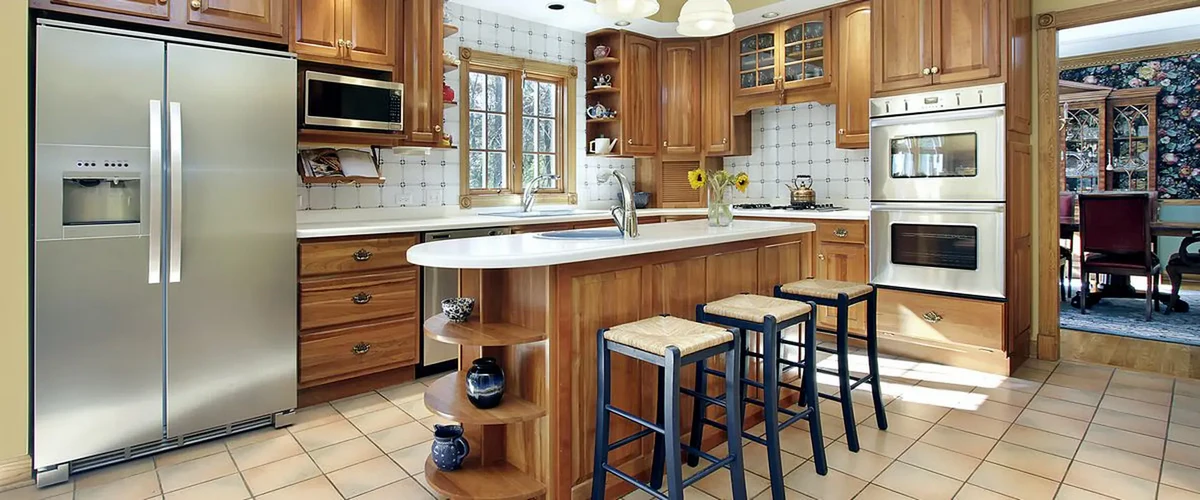
- Your material choices make a massive difference. Stock cabinets from a big-box store might cost $3,000 for an entire kitchen. Custom cabinetry? Try $20,000 or more. The same principle applies to countertops, flooring, and fixtures.
- Then there's your existing layout. Keeping your sink, stove, and appliances in their current spots saves thousands. Moving plumbing or electrical means opening walls, rerouting pipes, and potentially dealing with structural changes that increase both material and labor costs.
- The age and condition of your home play a role. Older homes often hide surprises behind those walls. Outdated electrical that needs upgrading to current code, plumbing that should have been replaced years ago, or structural issues all add unexpected expenses to your total cost.
- Location impacts pricing too. Urban areas with higher costs of living charge more for skilled labor. Competition among contractors, local permit requirements, and regional material availability all affect what you'll pay.
Average Kitchen Remodel Cost by Scope
| Remodel Type | Cost Range | What's Included |
|---|---|---|
| Minor Refresh | $15,000 - $30,000 | New paint, updated hardware, basic countertops, new lighting |
| Mid-Range Renovation | $35,000 - $65,000 | Semi custom cabinets, quality countertops, new appliances, upgraded flooring |
| High-End Remodel | $75,000 - $150,000+ | Custom cabinetry, premium granite or quartz, luxury fixtures, layout changes |
Kitchen Size
Cabinetry Level
Countertops & Details
Layout & Plumbing Scope
Lighting & Electrical
Flooring
Walls & Structural
Property Conditions
Cost Breakdown by Component
Let’s get specific about where each dollar goes in your kitchen remodeling project.
- Cabinets eat up the biggest chunk of your budget, typically 25-40% of the total cost. Stock cabinets start around $100 per linear foot installed. Semi-custom cabinets run $150 to $300 per linear foot. Custom cabinetry can exceed $500 per linear foot, but it gives you exactly what you want with features like soft-close drawers, roll-outs, and specialized storage solutions.
- Countertops vary wildly based on material. Laminate costs $20 to $50 per square foot installed. Granite runs $50 to $100 per square foot. Quartz typically falls between $60 and $120 per square foot. Luxury materials like marble or quartzite can exceed $150 per square foot.
- Appliances range based on quality and finish. A basic package (refrigerator, range, dishwasher, microwave) costs $2,000 to $4,000. Mid-range stainless steel appliances run $4,000 to $8,000. High-end brands can push that to $15,000 or more.
- Flooring options affect both cost and installation complexity. Vinyl plank flooring costs $3 to $7 per square foot installed. Tile runs $8 to $25 per square foot depending on material and pattern. Hardwood, while less common in kitchens due to moisture concerns, costs $12 to $30 per square foot installed.
- Plumbing work depends on what you're changing. Replacing a faucet costs $300 to $800. Moving your sink location adds $1,500 to $3,000. If you're adding a second sink or relocating major plumbing lines, expect $3,000 to $6,000 or more.
- Electrical work includes lighting, outlets, and potentially upgrading your electrical panel. Basic lighting updates run $500 to $1,500. Adding recessed lighting throughout your kitchen costs $1,500 to $4,000. Major electrical upgrades to handle new appliances can add $2,000 to $5,000.
- Backsplash installation typically costs $800 to $2,500 for materials and labor. Simple subway tile falls on the lower end, while intricate mosaic patterns or premium materials push toward the higher range.
Using a Kitchen Remodel Cost Calculator
A kitchen remodel cost calculator gives you a ballpark figure before you start calling contractors. These tools estimate expenses based on your space size, desired materials, and scope of work.
When using a cost calculator, input your kitchen’s square footage, the quality level you want (budget, mid-range, or luxury), and specific items you plan to update. The calculator uses national averages to generate an instant estimate.
However, calculators can’t account for several factors. They don’t know about the load-bearing wall you want to remove, the ancient plumbing hiding behind your cabinets, or that your electrical panel needs upgrading. They’re useful starting points, but you’ll need a realistic estimate from actual contractors who’ve seen your space.
Most calculators also can’t predict regional price variations. What costs $50,000 in one area might run $75,000 in another due to local labor rates and material availability.

Planning Your Kitchen Remodel Budget
Start by figuring out your absolute maximum spend. Seriously, sit down and calculate what you can actually afford, considering both cash on hand and any financing or payments you’re willing to take on.
Then subtract 15-20% for contingencies. Every kitchen renovation uncovers something unexpected. Maybe your subfloor needs replacement. Perhaps your electrical system isn’t up to code. These surprises add up quickly.
Prioritize what matters most to you. Would you rather invest in custom cabinetry or splurge on high-end appliances? Allocate more money toward your must-haves and find cost-effective alternatives for less important elements.
Consider phasing your project if money is tight. Complete the major structural work and basic updates now, then save for luxury upgrades later. This approach keeps your remodeling budget manageable while improving your space.
Track every expense as you go. Material costs add up faster than you think when you’re buying cabinets, countertops, flooring, lighting fixtures, hardware, and all those small items you didn’t budget for initially.
Cabinet Options: Stock vs. Semi-Custom vs. Custom
- Stock cabinets come in standard sizes and limited finishes. You buy them off the shelf and install them as-is. They're the most cost-effective option, typically running $100 to $200 per linear foot installed. Quality varies significantly, so inspect the construction carefully before buying.
- Semi-custom cabinets offer more flexibility in dimensions, finishes, and features. You can adjust heights, add roll-outs, choose from dozens of door styles, and incorporate specialized storage. Expect to pay $150 to $300 per linear foot installed. These often provide the best balance of customization and value.
- Custom cabinetry means exactly what you want, built specifically for your space. Every dimension is precise, every feature tailored to how you cook and store things. Custom solutions handle awkward corners, unusual ceiling heights, and specific storage needs beautifully. Prices start around $500 per linear foot and can exceed $1,000 for true luxury craftsmanship.
Countertop Materials and Their Costs
- Laminate remains the most affordable option at $20 to $50 per square foot installed. Modern laminates look surprisingly good and hold up well for budget-conscious renovations.
- Granite offers natural beauty and durability at $50 to $100 per square foot installed. Each slab is unique, which some homeowners love, and others find limiting when trying to match a specific look.
- Quartz combines engineered consistency with low maintenance. Prices range from $60 to $120 per square foot installed. It resists stains better than granite and never needs sealing.
- Marble brings timeless elegance but requires more care. Expect $75 to $150 per square foot installed, and be prepared to seal it regularly to prevent staining.
Choosing countertops involves balancing aesthetics, durability, and maintenance requirements against your budget. If you’re torn between several options and want to see how different materials can completely transform a space, our comparison of kitchen remodeling approaches across different price points shows real examples of how material choices impact the final result.
Small Kitchen Remodels: Maximizing Limited Space
A small kitchen presents unique challenges. Limited space means every inch counts, yet costs don’t necessarily drop proportionally to size.
You still need appliances, cabinets, a sink, and countertops. Installation labor doesn’t decrease dramatically just because your kitchen is smaller. In fact, working in tight spaces sometimes increases labor costs because everything takes longer.
However, you’ll definitely save on materials. Less flooring, fewer cabinets, a smaller countertop area, and less backsplash tile add up to real savings. A small kitchen remodel typically costs $15,000 to $40,000, depending on finish quality.
Smart design matters more in small kitchens. Consider these space-maximizing ideas:
- Vertical storage: Upper cabinets that reach the ceiling provide storage without consuming floor space
- Pull-out organizers: Maximize cabinet depth with roll-outs and pull-out shelves
- Compact appliances: Smaller refrigerators, narrow dishwashers, and combination microwave-hoods save space
- Light colors: Lighter cabinets and countertops make small spaces feel larger
- Open shelving: Strategically placed open shelves create visual space while providing storage
Labor Costs and What You're Actually Paying For
Labor costs typically represent 20-35% of your total kitchen remodel budget. Understanding what you’re paying for helps you evaluate contractor quotes.
Skilled labor includes carpenters who install cabinets, electricians who handle wiring and lighting, plumbers who relocate sinks and install fixtures, and tile setters who create that perfect backsplash. Each trade requires specific expertise, licensing, and insurance.
Rates vary by location and contractor experience. General contractor fees often include project management, scheduling subcontractors, obtaining permits, and ensuring everything meets code. You’re paying for their expertise in coordinating multiple trades and solving problems that inevitably arise.
Quality matters here. A cheaper contractor who cuts corners on installation will cost you more long-term when cabinets sag, tile cracks, or electrical issues appear. Skilled labor costs more upfront but delivers results that last.
Permits, Inspections, and Hidden Costs
Most kitchen remodels require permits, especially if you’re moving plumbing, updating electrical, or removing walls. Permit costs vary by location, typically running $200 to $1,000 depending on project scope.
Skipping permits might seem like a money-saving shortcut. It’s actually a disaster waiting to happen. Unpermitted work can cause problems when you sell, potentially derailing sales or forcing you to bring everything up to code at that point. Your homeowner’s insurance might also refuse claims related to unpermitted work.
Inspections ensure everything meets current building codes. Your contractor should handle permit applications and coordinate inspections, but verify this is included in their quote.
Other hidden costs include:
- Temporary kitchen setup: Many homeowners create makeshift kitchens during renovations, requiring a mini-fridge, microwave, and portable burner
- Eating out: Expect to spend more on meals when your kitchen is unusable for weeks
- Storage: You might need to rent storage space for kitchen items during construction
- Unexpected repairs: Water damage, outdated wiring, or structural issues that appear during demolition
Comparing Estimates and Choosing Contractors
- Material specifications: Does the quote list specific cabinet lines, countertop materials, and appliance models?
- Labor breakdown: Can they explain what each line item covers?
- Timeline: How long will your project take from start to finish?
- Payment schedule: Reasonable contractors request payments tied to project milestones, not all upfront
- Warranty: What's covered after completion?
Frequently Asked Questions
How long does a typical kitchen remodel take?
Minor updates take two to four weeks. Full renovations require six to twelve weeks, sometimes longer if you’re waiting on custom cabinetry or dealing with structural surprises. Your contractor should provide a detailed timeline based on your specific project scope.
Should I remodel my kitchen before selling?
A well-executed mid-range kitchen remodel typically returns 50-70% of its cost at resale, according to Remodeling Magazine’s Cost vs. Value report. Focus on updates that appeal broadly rather than ultra-personalized luxury features if you’re selling soon.
Can I live in my house during a kitchen remodel?
Yes, though it’s inconvenient. Expect dust, noise, and no access to your kitchen for weeks. Set up a temporary kitchen in another room with a microwave, mini-fridge, and coffee maker. Many homeowners eat out more or rely on prepared foods during renovation.
What's the best flooring for kitchens?
Tile remains popular for durability and water resistance. Luxury vinyl plank offers a cost effective alternative that’s easier to install and comfortable underfoot. Hardwood looks beautiful but requires more maintenance in a kitchen environment.
How can I save money without sacrificing quality?
Keep your existing layout, choose semi-custom cabinets instead of custom, select mid-range appliances, and do some work yourself, like painting or installing hardware. Focus your budget on elements that impact daily use, like cabinet quality and countertop durability.
Ready to Love Your Kitchen Again?
After reading through all these costs, timelines, decisions, and calculations, you might be thinking there has to be a simpler way to get the kitchen you actually want.
There is.
At GiGi Homes and Construction, we handle kitchen renovations from concept through completion. You won’t coordinate multiple contractors, chase down permits, or worry about whether your electrician and cabinet installer are ever going to show up on the same day. We manage everything while keeping you informed at every step.
Our design-build approach means we plan your kitchen with you, understanding how you cook, what storage you need, and what style makes you happy. We’ve completed hundreds of kitchen remodels, so we know how to maximize your investment while avoiding the mistakes that drive costs up and quality down.
We provide clear estimates that break down exactly where your money goes. No surprises, no hidden fees, just honest pricing and quality craftsmanship backed by our 5-year warranty.
Want to discuss your kitchen remodeling project and get a realistic idea of what it will actually cost? Call us at (703) 675-7574 or message us here. Let’s create a kitchen you’ll love for years to come.