The short version before we get into it: most wainscoting lands at 32 inches off the finished floor in a room with standard 8-foot ceilings. Taller ceilings mean you go higher.
For a more formal, two-thirds-height look (sometimes called a plate rail), push the cap up to 54 or 60 inches. Basements follow the same math, but lower ceilings and moisture rules change a few things. That’s the whole idea. The rest of this post walks through the exact measurements, room by room, and tells you when it’s probably smarter to hand the tape measure to someone else.
What Height Should Wainscoting Actually Be?

Use these three ranges:
- 32 inches for standard 8-foot ceilings. The classic, safest choice, and it matches most chair-rail heights.
- 36 to 40 inches for 9-foot ceilings, so the proportions still feel right.
- 54 to 60 inches if you want full, tall wainscoting. Works beautifully in dining rooms, stair walls, and formal entries.
A good sanity check: stand back, eyeball the wall, and ask yourself if the paneling looks like it lives in the lower third of the room. If yes, you’re close.
The One-Third Rule (And When to Break It)
Interior designers lean on the one-third rule because human eyes like clean proportion. You divide the wall height by three, then set the top of your wainscoting at that number. So a 96-inch wall ÷ 3 = 32 inches. A 108-inch wall ÷ 3 = 36 inches. Simple math, rarely wrong.
When should you break the rule?
Two common cases. When existing trim, windows, or doorways already set a line, matching them looks cleaner than following a formula. And when you actually want the tall, two-thirds look (think historic row homes or English cottages), flip the rule and cap the panels at roughly 64 inches on an 8-foot wall.
Heights By Room, At A Glance
Here’s a cheat sheet worth bookmarking:
| Room | Ceiling Height | Wainscoting Height | Style Note |
| Living room | 8 ft | 32 in | Matches chair rail |
| Dining room | 8 to 9 ft | 36 to 60 in | Go tall for formal |
| Hallway / entry | 8 ft | 36 in | Handles bumps and scuffs |
| Bathroom | 8 ft | 36 to 48 in | Protects from splashes |
| Kids’ bedroom | 8 ft | 32 to 36 in | Scratches happen |
| Stair wall | sloped | 32 in above each tread | Follows the stair line |
| Basement | 7 to 8 ft | 32 to 36 in | Shorter keeps ceilings feeling tall |
Basement Wainscoting Needs A Different Game Plan
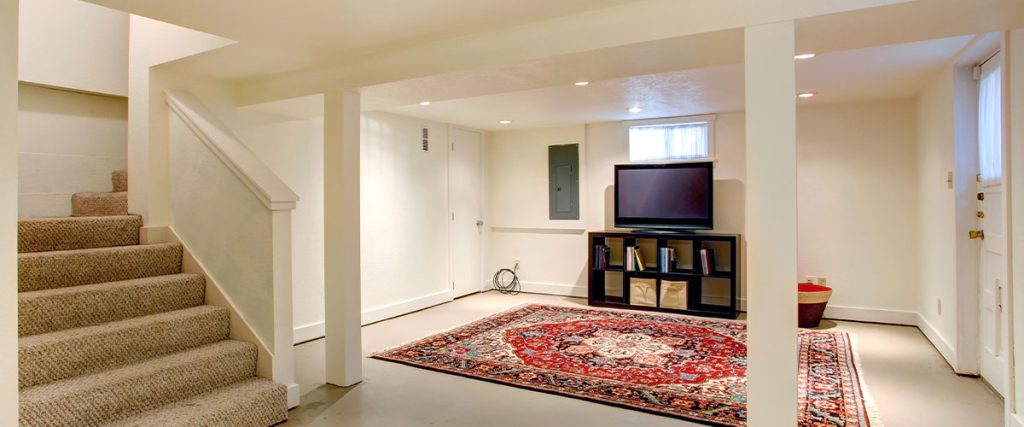
Basements add two wrinkles that above-grade rooms don’t. First, the ceilings sit lower, often 7 feet or 7.5 feet, so going too tall with panels makes everything feel squat. Second, moisture. Any wood product pressed against a below-grade wall can warp, swell, or grow mold if the space isn’t properly sealed.
For the real numbers, the EPA’s moisture and mold prevention guidance is the standard most contractors follow. The short version: keep indoor relative humidity below 60 percent, seal the foundation walls, and use materials rated for high-moisture areas.
For the paneling itself, that usually means one of three options:
- PVC or cellular vinyl panels that don’t absorb water at all, ideal for any basement with history of dampness.
- Moisture-rated MDF, fine in a finished, conditioned basement with a working dehumidifier.
- Real hardwood (oak, poplar) only in fully finished basements with active humidity control.
Height-wise, 32 inches is the basement sweet spot. Low enough to keep ceilings looking tall, high enough to hide the scuff line from couches, ping-pong tables, and the occasional toy truck.
Where People Usually Mess It Up
A few patterns we see on repeat:
- Installing at a random height because the leftover trim was a certain size. The wall will read “off” forever, and you’ll notice every time you walk in.
- Forgetting about outlets. Standard receptacles sit around 12 to 18 inches off the floor, so the panel needs to clear them cleanly or frame them with intent.
- Ignoring the stair slope. Wainscoting on stairs steps up with the treads, it doesn’t stay flat. Measure 32 inches straight up from each step.
- Skipping the top cap. The chair rail on top is what ties the whole thing into the rest of the room.
A Few Quick Questions We Hear Often
Does wainscoting make a room feel smaller?
Not usually, as long as the height stays in proportion. Short 32-inch wainscoting actually makes ceilings look taller. The full 60-inch version can shrink a room if the ceiling is already low.
Can I install wainscoting directly over drywall?
Yes, in most rooms. The exception is basements with bare concrete or uninsulated foundation walls. Those need framing, insulation, and a vapor barrier first.
Beadboard, shiplap, wainscoting. What’s the difference?
Wainscoting is the umbrella category, any paneling on the lower portion of a wall. Beadboard and shiplap are two styles that fall under it.
Do I need a permit?
Paneling alone usually doesn’t require one. If your basement project also includes framing, electrical, or plumbing, Fairfax County and most Virginia localities do require permits. Check your county’s building services office before the first panel goes up.
Or, You Could Just Let Us Handle It
Measuring every wall, ripping panels to size, working around outlets, installing a moisture barrier, cutting stair-step wainscoting on a slope. That’s a long weekend for most homeowners, and usually two long weekends when the first cut comes out wrong. Our team handles all of it in-house as part of every basement remodeling project, start to finish, with the proportions actually looking right when you walk in.
If you’d rather skip the tape measure, call us at (703) 675-7574 or message us here for a free quote.