The size of your walk-in closet matters less than most people think. The layout is what makes or breaks it.
A 5 by 7-foot closet with a smart layout will serve you better than a 10 by 10-foot room where the hanging rods, shelves, and drawers were placed without much thought. That said, you do need a baseline amount of space to work with, and knowing those numbers before you start planning saves a lot of backtracking.
So here’s where to begin.
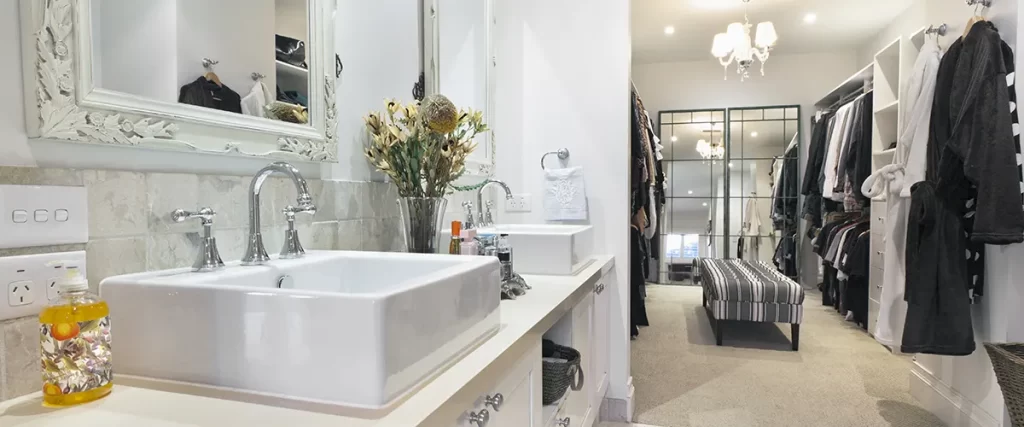
The minimum most designers work with is 5 by 5 feet. Below that, once clothing is hung on two sides, the walking space in the middle shrinks to the point where the closet stops being practical. A standard comfortable walk-in sits around 7 by 10 feet. That gives you storage along two or three walls, a clear path through the middle, and enough room that getting dressed in the morning doesn’t feel like a puzzle.
The Layout You Choose Changes Everything
There are five main walk-in closet layouts, and each one suits a different room shape and storage need.
| Layout | Minimum Size | Works Best For |
| Single wall | 4 x 5 ft | Narrow spaces, one person |
| Double sided | 6 x 7 ft | Couples, shared wardrobes |
| L-shaped | 5 x 8 ft | Corner rooms, medium wardrobes |
| U-shaped | 7 x 10 ft | Three-wall storage, larger homes |
| Island layout | 10 x 12 ft | Spacious master bedrooms |
A single-wall layout lines everything up on one side. It works well in narrow spaces and smaller bedrooms, and it’s often the right call when you’re working with an existing room that doesn’t have much depth to spare. You get hanging space, a shelf or two above, and maybe a low shoe rack below.
The double-sided layout puts storage on two opposing walls with a walking aisle down the center. This is the most common layout for couples, and it works particularly well when each person gets one full side. You need at least 6 feet of total width for the aisle to feel comfortable once clothes are hanging on both sides.
L-shaped closets run along two adjoining walls and handle corner space well. They’re a good fit for medium-sized rooms and tend to feel more open than a double-sided layout of the same square footage, because one end of the space stays clear.
The U-shaped layout is the one most people picture when they think of a proper walk-in. Storage on three walls, a center aisle, room for a full-length mirror. You need at least 7 by 10 feet for this to work without feeling cramped, and closer to 100 square feet if you want all three walls genuinely usable.
Then there’s the island layout.
An island walk-in closet needs at least 36 to 42 inches of clearance around the island on all sides, which is why the square footage requirement jumps so significantly. The island itself typically holds pull-out drawers, a folding surface, or extra shoe storage, and it adds a lot of function when the space genuinely supports it. In a room that’s slightly too small, it just gets in the way.
The Numbers Behind the Storage
Walk-in closets live and die by a handful of specific measurements, and most problems come from one of these being off.
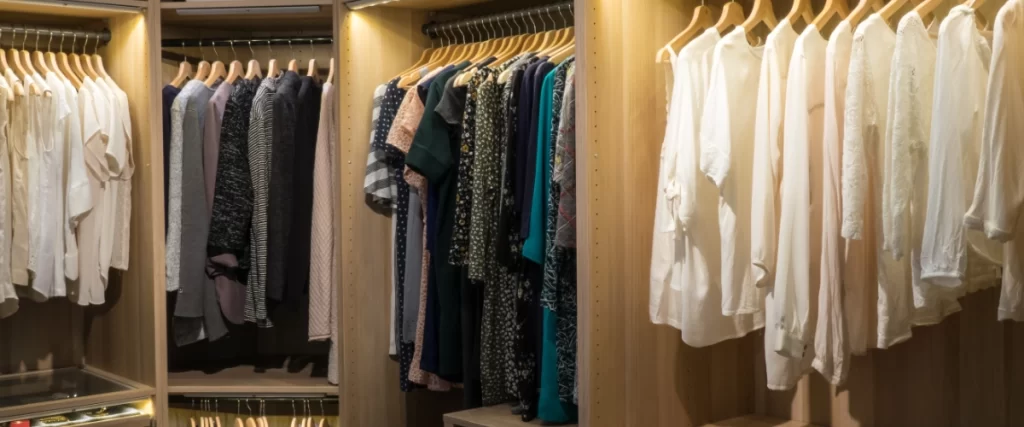
Hanging rods need at least 24 inches of depth from the wall. Any less and clothes press against the back surface and wrinkle. For shirts and folded pants on double rods, space them about 40 inches apart vertically. Long items, coats, dresses, and tall boots need a clear run of 60 to 65 inches below the rod, so plan at least one full-height hanging section into any layout.
Shelving depth sits best between 12 and 16 inches for folded clothes and accessories. Go deeper than that and things get buried at the back. Pull-out drawers work well between 18 and 24 inches deep, with the deeper end better suited to heavier items like sweaters and jeans.
Shoe racks at 12 inches deep placed near the closet entrance keep your most-used pairs reachable without digging. Open shelves for shoes along a back wall also make good use of space that might otherwise go to a second hanging rod that isn’t really needed.
Keep at least 24 inches of clear walking space throughout the closet. This is the number that gets ignored most often, and it’s the one that determines whether a finished closet actually feels functional or just looks good in photos.
Vertical Space and Why Most Closets Waste It
The average reach-in closet is built with one rod and one shelf above it. A walk-in that copies that approach is leaving a significant amount of storage on the table.
Double hanging rods on the shorter walls of a closet immediately double the capacity for shirts, jackets, and everyday clothes. The wall sections reserved for full-length hanging can stay single-rod. This split approach, double rods on some walls and single rods on others, tends to be the most practical balance for a mixed wardrobe.
Open shelves above the rod line work well for seasonal storage, bags, and items you access occasionally rather than daily. Overhead lighting mounted just above rod height makes a noticeable difference in usability, since a single ceiling fixture tends to cast shadows exactly where you’re looking most.
If you want to understand how the International Residential Code approaches habitable space and room minimums in a renovation context, it’s worth a read before you start moving walls.
A Few Things Worth Knowing Before You Start
Sliding doors instead of swing doors recover several square feet of floor space in a smaller closet. A full-length mirror on the back wall reads as more spacious than one mounted on a side wall, and planning for it early means you’re not trying to fit it in around existing shelving later.
If your closet shares a wall with a bathroom, the ventilation setup matters. Moisture migration into a closet can affect clothing and built-in wood components over time, and it’s worth factoring into your planning.
When You’d Rather Just Have Someone Handle It
If you’ve gotten this far and the main feeling is that there are a lot of variables to manage, that’s a fair read. Closet design involves a sequence of small decisions that add up quickly, and getting the dimensions slightly wrong at the planning stage tends to produce a finished space that’s frustrating in ways that are hard to articulate but easy to feel every morning.
Gigi Homes and Construction takes care of the whole process. If you’re also thinking about a broader renovation while you’re at it, check out our home remodeling services because closet work often fits naturally into a larger project.
Call us at (703) 675-7574 or message us here when you’re ready to get into the specifics.