
Transforming your basement into usable living space costs anywhere from $30,000 to $75,000 for most homes, though the final price depends heavily on size, finishes, and complexity.
The average homeowner spends about $50 per square foot for a standard basement finishing project, which means a 1,000-square-foot basement runs roughly $50,000. Labor costs take up 40-50% of your budget, materials another 35-40%, and permits, inspections, and surprise issues account for the rest. Want multiple bedrooms, a full bathroom, or high-end materials? Expect costs to climb toward $100 per square foot or more.
Quick Cost Calculator
Here’s what you can expect based on basement size and finish level:
| Basement Size | Basic Finish | Mid-Range Finish | High-End Finish |
| 500 sq ft | $15,000 – $25,000 | $25,000 – $37,500 | $37,500 – $75,000 |
| 800 sq ft | $24,000 – $40,000 | $40,000 – $60,000 | $60,000 – $120,000 |
| 1,000 sq ft | $30,000 – $50,000 | $50,000 – $75,000 | $75,000 – $150,000 |
| 1,500 sq ft | $45,000 – $75,000 | $75,000 – $112,500 | $112,500 – $225,000 |
These numbers give you a starting point. Your actual total cost shifts based on local labor rates, material choices, and how many separate rooms you create.
What Drives Basement Remodeling Costs?
Square Footage and Layout
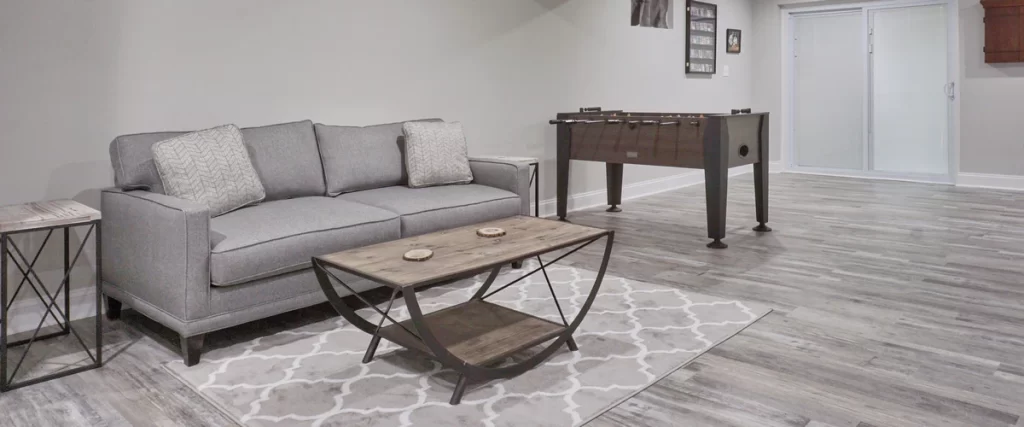
Basement size matters most. A larger basement needs more materials, more labor hours, and more time to complete. But square footage alone doesn’t tell the whole story.
Creating multiple rooms costs more than an open plan. Each wall needs framing, drywall, doors, and potentially separate electrical circuits. A basement with three bedrooms and a family room costs significantly more than converting the same square footage into one big recreation area.
Labor Costs Breakdown
Skilled professionals handle most basement finishing work, and their expertise comes at a price. Here’s who you’ll need and what they typically charge:
- General contractors coordinate the project and charge 10-20% of total construction costs
- Framers build walls at $5 to $10 per square foot
- Electricians run wiring and install fixtures at $50 to $100 per hour
- Plumbers handle bathroom and wet bar installations at $70 to $130 per hour
- Drywall specialists finish walls and ceilings at $1.50 to $3 per square foot
- Flooring installers charge based on material type, from $2 to $12 per square foot
Labor expenses vary dramatically by region. Big cities see rates 25-35% higher than rural areas. Local labor availability also affects pricing; if contractors are busy, they charge more.
Material Costs That Add Up
Walk into any home improvement project knowing materials will surprise you. Basement finishing requires a lot of different products.
Framing lumber for a 1,000-square-foot basement runs $800 to $1,500. Insulation adds another $500 to $1,200. Drywall costs $400 to $800 for materials alone. That’s before flooring, which ranges from $2,000 for basic carpet to $12,000 for engineered hardwood or tile.
Want a basement ceiling that looks good? Drop ceilings cost $2 to $5 per square foot installed. Drywall ceilings run $3 to $8 per square foot. Exposed ceilings with painted joists save money but limit headroom and look industrial.
Room-by-Room Cost Additions
Bathrooms Change Everything
Adding a half bathroom to your basement finishing project costs $8,000 to $15,000. A full bathroom with a shower runs $12,000 to $25,000. These numbers include plumbing costs, fixtures, tile work, and ventilation.
Here’s why bathrooms cost so much: you need to connect to existing plumbing lines, which often means breaking concrete and running new pipes. Basement bathrooms sometimes need ejector pumps to move waste upward, adding $800 to $2,000 to plumbing and electrical work.
If you’re planning bathroom work anyway, check out our bathroom remodeling services for professional help with fixtures, tile, and layout design.
Wet Bars and Entertainment Spaces
A wet bar transforms your finished basement into an entertainment hub. Basic installations cost $2,000 to $4,000. Custom cabinetry, stone countertops, and premium fixtures push that to $6,000 to $12,000.
Home theater setups vary wildly. A basic setup with good lighting and outlets runs $1,500 to $3,000. Dedicated theaters with soundproofing, tiered seating, and projection systems cost $20,000 to $50,000.
Bedroom Requirements
Basement bedrooms must meet specific safety codes. The big one? Egress windows. These emergency exits cost $2,500 to $5,000 each, installed. You need one for every bedroom, sometimes requiring foundation cuts and window wells.
Bedroom spaces also need proper lighting, heating connections to your home’s HVAC system, and adequate ceiling height. Local building codes typically require 7-foot ceilings minimum. Some older homes need floor lowering or structural changes to meet this requirement.
Hidden Costs Nobody Warns You About
Moisture and Waterproofing
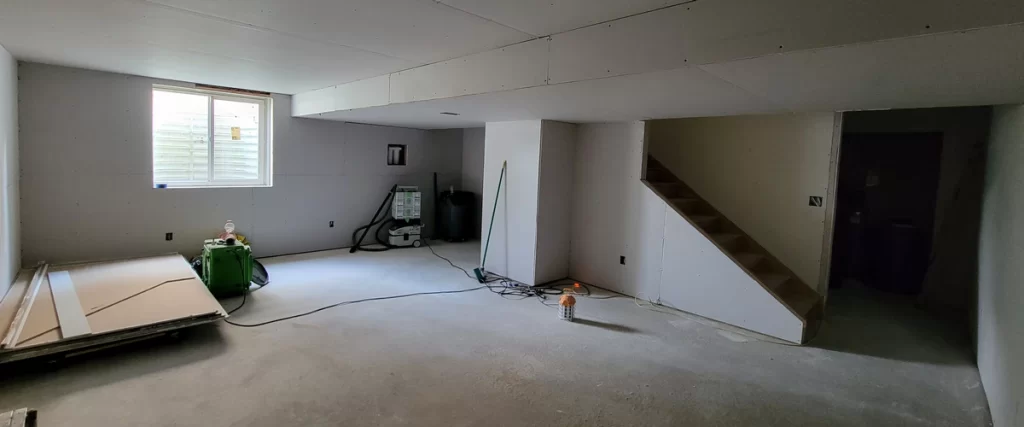
Basements and water have a complicated relationship. Before finishing any basement space, you need to address moisture issues.
Sump pump installation costs $800 to $2,500. Interior waterproofing runs $2,000 to $6,000. Exterior waterproofing for serious problems hits $8,000 to $15,000. Skip this step, and you’ll tear out your beautiful new finished basement in a few years to fix mold and water damage.
Permits and Inspections
Building permits cost $500 to $2,000 depending on project scope. Your contractor handles applications, but you pay the fees. The International Code Council (ICC) develops building codes that most local jurisdictions adopt, which means your basement remodel must meet their residential building standards.
Expect multiple inspections: framing, electrical, plumbing, and final inspection. Each failed inspection means correcting issues and paying for re-inspection, delaying your project and adding unexpected costs.
HVAC Extensions
Your existing heating and cooling system might not handle the additional living space. Extending ductwork costs $1,500 to $3,500. Installing a separate HVAC zone with its own thermostat runs $3,000 to $7,000.
Basement spaces stay cooler naturally, which sounds great in summer but creates heating challenges in winter. Proper climate control prevents moisture buildup and keeps your investment comfortable year-round.
How to Save Money Without Sacrificing Quality
Strategic Planning
Think hard about how you’ll actually use the space. A guest suite that gets used twice a year might not justify the cost of a full bathroom. Maybe a half bathroom works better.
Open floor plans cost less than multiple bedrooms. If you don’t need privacy walls, skip them. You save on basement framing, doors, electrical circuits, and labor hours.
Phasing your project also works. Finish the main area now, leave future basement bedrooms as storage until you need them. This spreads costs over time and lets you live with the space before committing to every detail.
DIY Where It Makes Sense
Handle the work you can manage safely and legally. Painting saves $1,500 to $3,000 in labor costs. Installing trim and doors saves another $1,000 to $2,000. Basic demolition and prep work cuts costs if you have time and energy.
Leave electrical work and plumbing to licensed professionals. DIY cost savings disappear fast if you create safety hazards or fail inspections. Most jurisdictions require licensed contractors for these trades anyway.
Material Choices Matter
Luxury vinyl plank looks great and costs half what hardwood does. Standard fixtures work as well as designer ones. Basic lighting provides the same illumination as expensive recessed lighting, just with different aesthetics.
Shop around for materials. Prices vary significantly between suppliers. Contractors often get trade discounts, but buying your own materials for a DIY project saves money if you hunt for deals.
Basement Cost Calculator Factors
Several factors influence your final cost beyond just square footage:
Location and local building codes determine permit costs, inspection requirements, and minimum standards for ceiling height, windows, and emergency exits.
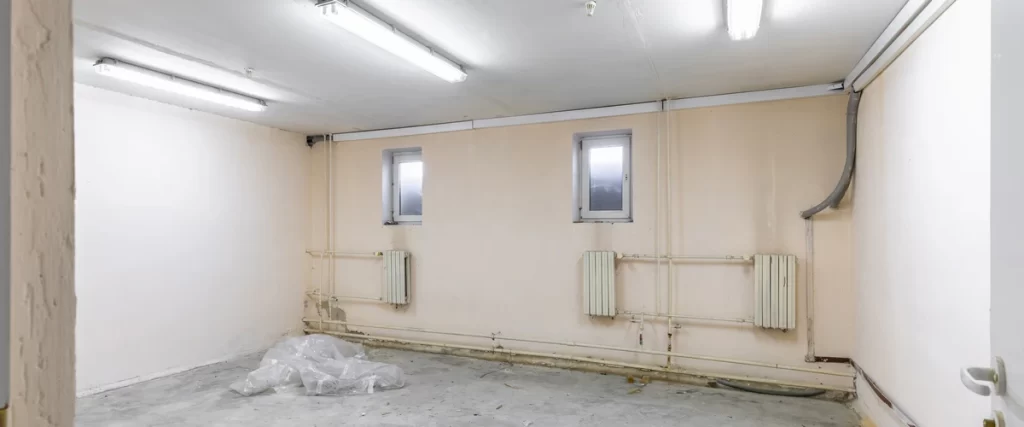
Existing conditions matter tremendously. Is your basement already dry? Are the walls straight? Is there adequate ceiling height? Fixing problems before finishing adds thousands to your budget.
Finish level makes the biggest difference. You can create usable living space cheaply with basic materials, or build a luxurious rental unit that generates rental income and boosts property value.
Number of rooms affects costs exponentially. More walls, more doors, more electrical circuits, more complexity.
Return on Investment
Basement finishing projects recoup 70-75% of costs at resale, according to national averages. That’s decent but not spectacular compared to other home improvement projects.
The real value comes from usable square footage. A 1,500-square-foot home with a 1,000-square-foot finished basement suddenly offers 2,500 square feet of living space. That changes which buyers consider your home and often moves you into a higher price bracket.
Rental units offer another angle. A legal basement apartment with separate entrance, full bathroom, and kitchen generates rental income that covers mortgage payments or funds other expenses. Check local codes, many areas restrict basement rentals or require special permits.
Frequently Asked Questions
How long does a basement finishing project take?
Most basements take 6-12 weeks to complete. Larger basements with multiple bedrooms, bathrooms, and custom work can stretch to 16 weeks. Delays happen when inspections fail or surprise issues emerge.
Can I finish my basement myself?
Partially. You can handle demolition, painting, and simple carpentry. But electrical work, plumbing, and anything requiring permits needs licensed professionals. Most homeowners end up with a hybrid approach, doing cosmetic work themselves while hiring pros for technical systems.
Do I need permits for basement remodeling?
Yes. Any project that involves electrical work, plumbing, or structural changes requires building permits. Finishing a basement counts as creating new living space, which triggers permit requirements in virtually all jurisdictions. Working without permits creates liability issues and problems when selling your home.
What’s the cheapest way to finish a basement?
Keep it simple. Skip the bathroom, use basic flooring like carpet or luxury vinyl plank, install a drop ceiling, and create an open floor plan instead of separate rooms. This brings costs down to $30-$35 per square foot while still creating functional family room space.
Will finishing my basement increase my home’s value?
Generally yes, though the increase rarely equals your total investment. Expect to recoup 70-75% of costs. The bigger benefit comes from making your home more attractive to buyers and expanding your effective square footage, which can push your home into a higher market tier.
Making Your Basement Vision a Reality
Reading through all these cost considerations, permits, code requirements, and hidden expenses can feel overwhelming. You’re looking at weeks of project management, coordinating multiple contractors, dealing with inspections, and hoping nothing unexpected pops up when they open those walls.
Maybe you’d rather just call someone who handles everything. We manage basement remodeling projects from initial planning through final inspection, coordinating all the trades, pulling permits, and making sure everything meets local building codes and safety standards. You get experienced professionals who’ve handled hundreds of basements and know exactly where problems hide.
Ready to turn that basement space into something your family actually uses? Call us at (703) 675-7574 or message us here to discuss your project. We’ll walk through your basement, talk about your vision, and give you an honest assessment of what it takes to make it happen.